
It's a Bubble

My infant son recently learned the word “bubble,” which he now uses relentlessly in any given situation. In finance, the word “bubble” incites fear and neuroticism. It simply means capital is at severe risk and denotes danger for those engaged in speculative markets.
Is my son trying to tell me something? Are we in a dangerous asset bubble that is destined to pop at any moment, succumbing the world economy to an unprecedented financial crisis that impoverishes billions?
Skepticism is rising, and for good reasons.
An asset bubble is loosely defined as an irrational price increase irrespective of intrinsic value. All assets (stocks, real estate, baseball cards) are susceptible to over-speculation and rapid price swings that go far beyond reason.
Psychological factors such as greed, fanaticism, or a sense of false security can cause irrational price behavior. Moreover, there are systemic factors that push markets into unnatural configurations.
Inflation and market manipulation exacerbate these bubbles and keep them inflated for much longer than consumer demand would normally allow. There is a political motive to blow and sustain asset bubbles. Our society and financial system demand the perpetual rise of assets. That does not make them immune.
All bubbles are unique, but they all end the same way. Collapse and revert to the mean.
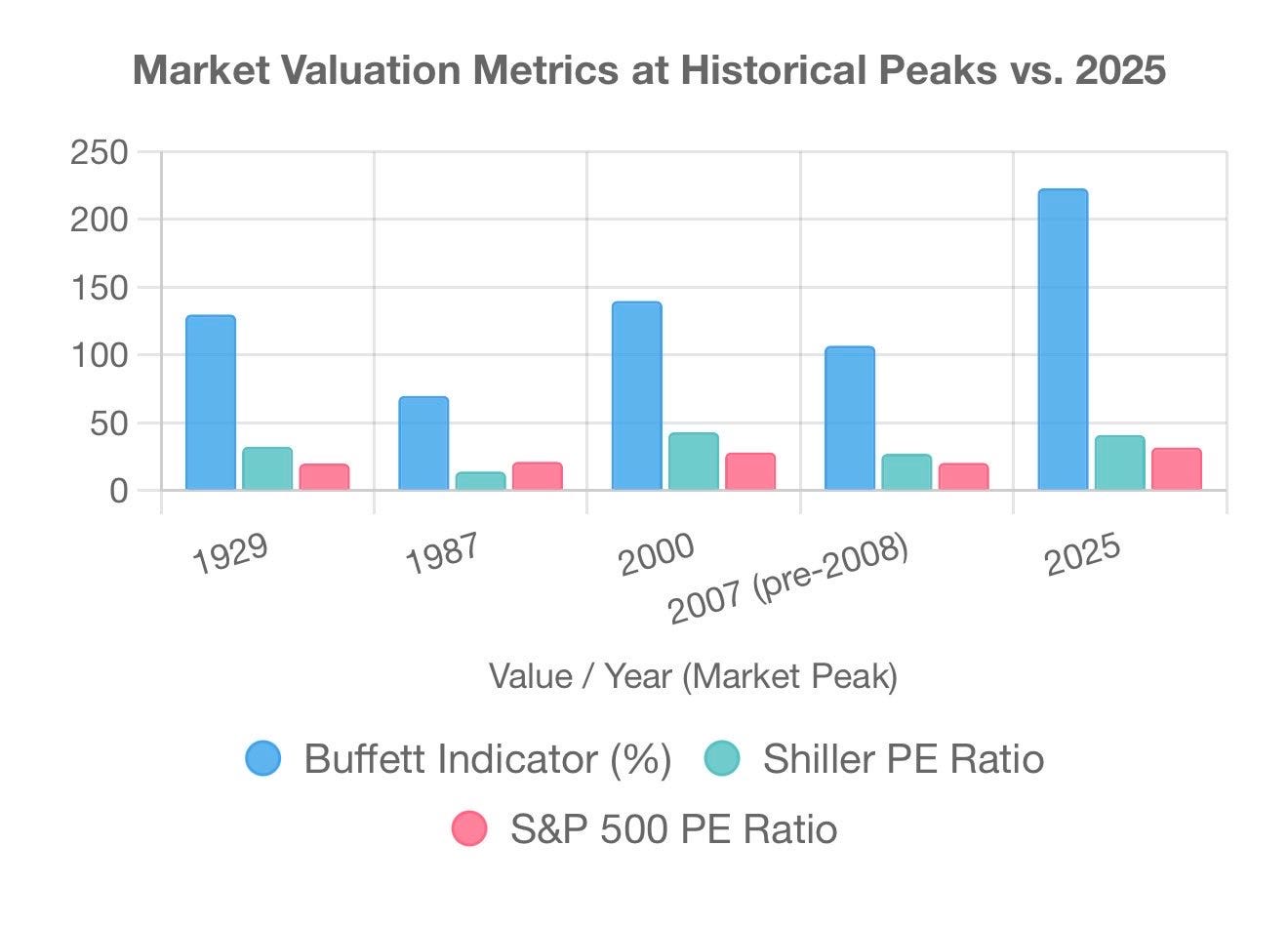
We are clearly in an asset bubble by all measures. As a percentage of GDP, the stock market is at levels comparable only to the years prior to the Dot-com Crash (2000) and the Great Crash of 1929.
Real estate prices relative to the median American income are equivalent to the ratio seen before the Great Recession in 2007.
By no means are we guaranteed an impending collapse… even though we desperately need one. The monetary mechanism that facilitates these bubbles is so embedded in geopolitics and shadow banking that these asset prices could theoretically rise to eternity.
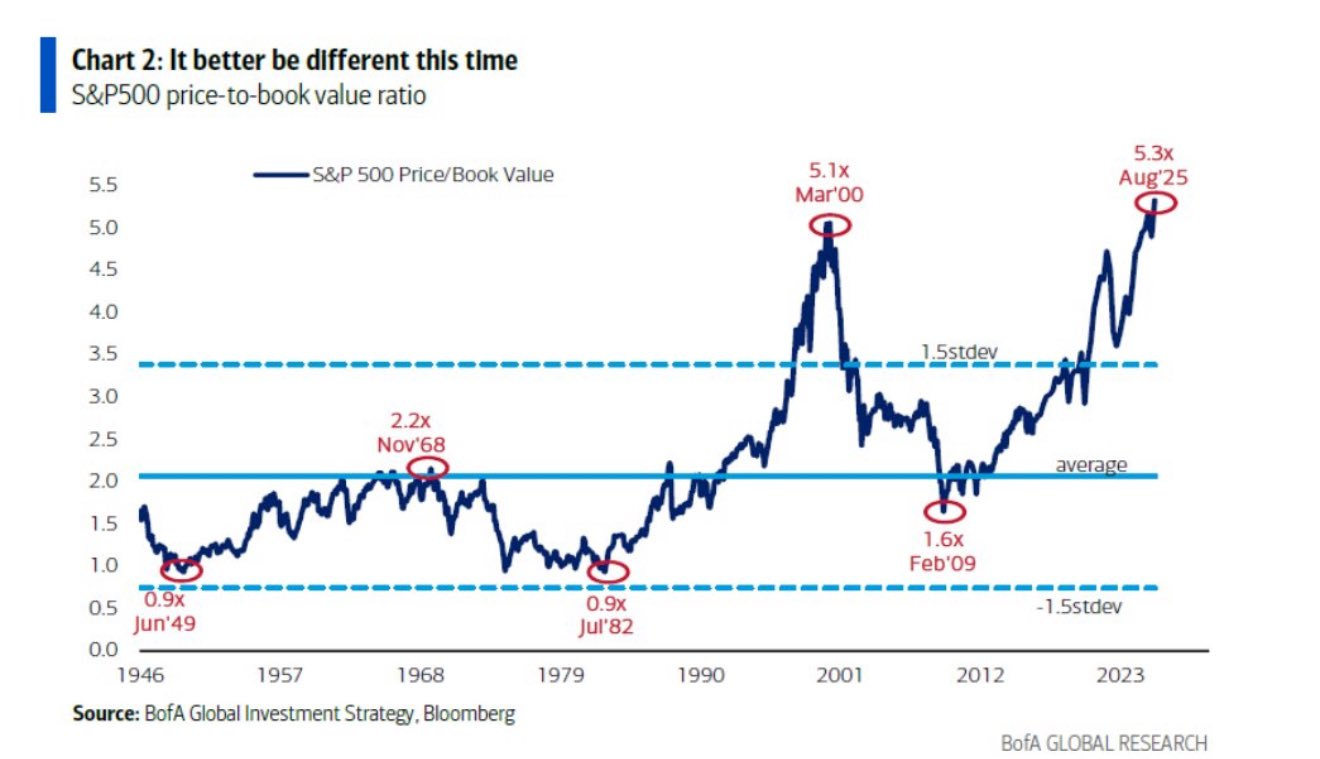
Nevertheless, there must be a buyer to justify the price. Stocks crash when investors lose confidence in earnings and there are overwhelming sellers; housing values crash when there are too many foreclosures, and no one is willing to buy; even commodity prices must come back to reality when demand craters. The upper limit is determined by the willingness of market participants to buy when things are egregiously expensive.
But what if that rationality never comes? What happens if there is always a buyer who purchases any asset at any price and can justify any expense as a matter of life and death? What if this isn’t hypothetical?
The bubble that plagues our society is entirely artificial.
Governments do not clip coupons or abstain from irrational purchases. They are uncompromising profligates that abuse the taxpayer’s contributions. They can spend money they don’t have by squandering the tax revenue incurred from labor that has yet to be wrought.
Our future productivity is exploited to blow asset bubbles that are immune to the pressures of consumer demand. Entire generations will be priced out of markets before this bubble pops.
There is a limit to greed and speculation, but there is no ceiling to debt.
If interest payments are guaranteed by the taxpayer’s past, current, and future income, there will always be someone happy to lend. Government debt is profitable without any assumption of risk. Therefore, even the most hazardous market can be sustained, as all the risk has been transferred to an entity that lawfully steals from the populace through forcible taxation or currency degradation.
The generational bubble we find ourselves in is not defined by the greed of investors nor the willingness of participants. It is kept alive by endless debt perpetually serviced by your voluntary tax contributions and involuntary destruction of purchasing power.
There is no stock market bubble, real estate bubble, cryptocurrency bubble, or AI bubble. Just one all-encompassing debt bubble of an unimaginable scale.
Without excess leverage by financial institutions, stocks revert to trading at fundamental valuations. The housing unaffordability crisis disappears without the government backing of mortgages. If banks were forced to assume the risk of lending, they would never underwrite a loan at these insane prices.
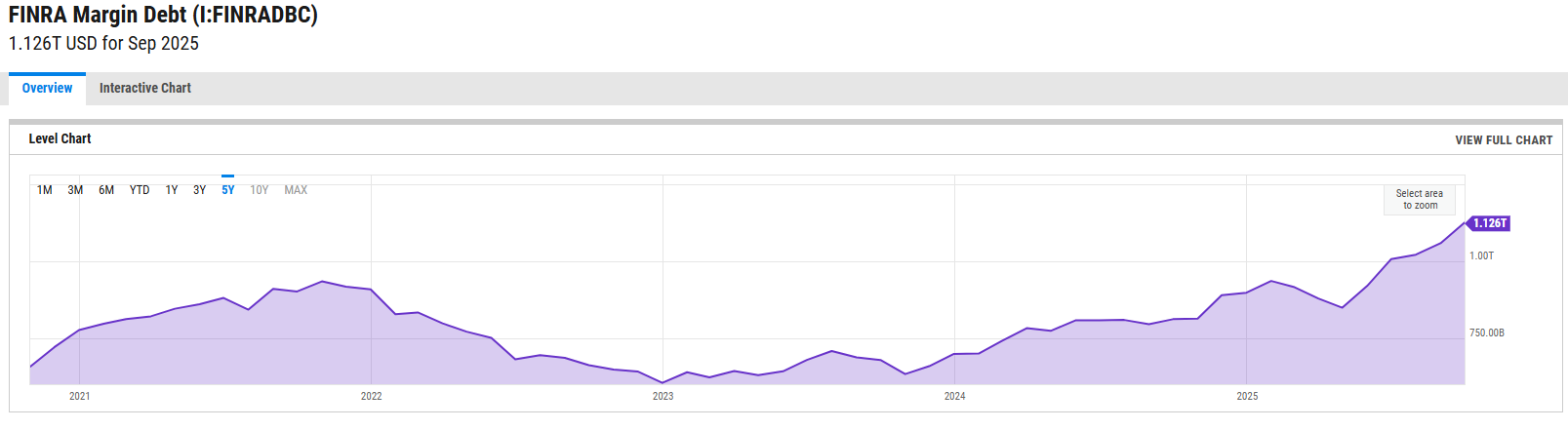
The actual market of consumers and reasonable investors are begging for this bubble to pop because they are either already priced out or are terrified of getting caught holding the bag if/when this thing blows up.
The mechanism that keeps asset prices in a perpetual state of ascension is unfortunately quite durable. It is a bubble made of reinforced boron steel smelted with unsustainable debt and irresponsible political motives.
This bubble will not be popped by the mere acceptance of overvaluation. It will not burst under the weight of crashing consumer confidence. It won’t even be phased by a crisis of poverty or an evaporating middle class.
It doesn’t matter if stocks trade at 1000x their earnings. It doesn’t matter if 99% of Americans can’t afford a house. It certainly does not matter if tax revenues can no longer support the national debt interest.
They can always print more money and inflate the wealth of those who hold assets at the expense of those who never will.
The steel bubble can only be popped by utter demoralization in the populace. It must get bad… really bad. Only the total collapse of faith in society can pop this monstrosity. Eventually the currency becomes so insignificant that it’s no longer practical to labor for it. The people will forgo monetary compensation because they can’t buy anything with it. All past debts will be inflated away, and ultimately lending money won’t be profitable at any term or interest rate. Businesses won’t be able to raise their prices fast enough, and the people begin to hoard goods as the cost triples overnight. Commerce ceases to exist, crime gets out of control, and governments collapse.
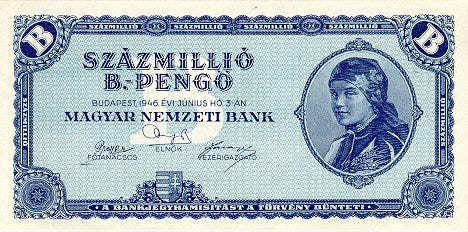
This isn’t theoretical. It’s happened dozens of times on every continent throughout history. Weimar Germany, Bolshevik Russia, Confederate America, post-WWII China and Japan, Zimbabwe, Venezuela, Yugoslavia, Argentina, Brazil, India, Chile, Peru, and Angola all experienced hyperinflation from irresponsible debt and money printing. Those are just the ones from the last 160 years! Human civilization keeps making the same mistakes, and we are not immune to this disaster.
It happens very slowly at first and then exponentially fast all at once. No one knows when the bubble meets its crescendo because at the top, we experience the euphoria that we’re all getting rich. With hindsight we realized we were totally screwed, but at that moment, we didn’t want to miss out on the gains.
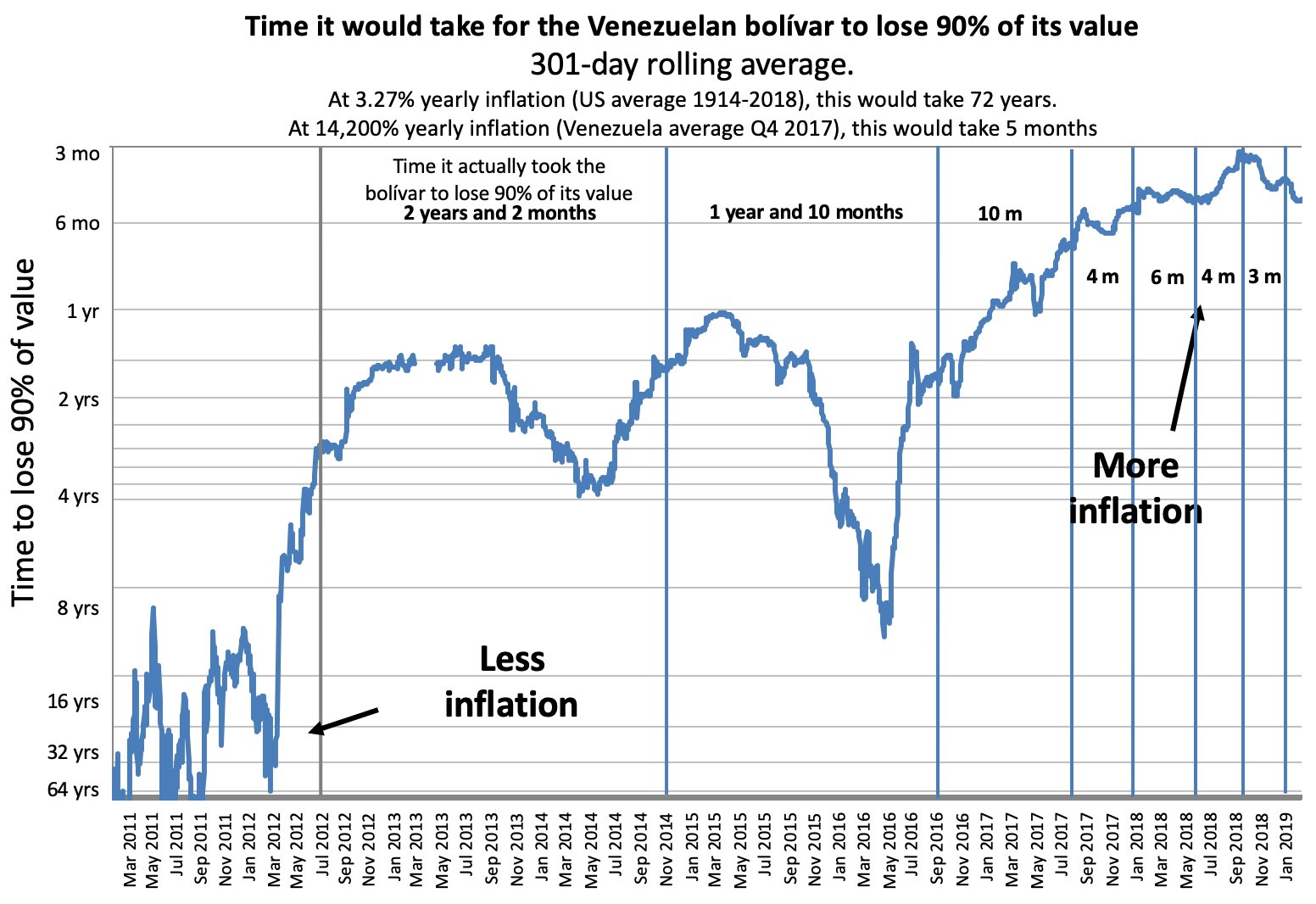
This bubble pop is going to be horrific, but it’s not the end. In fact, it’s the beginning of an era of prosperity built purely on selfless work, quality goods, and fiscal responsibility. Forgive me for my optimism, but I have faith that we will dig ourselves out and come out better on the other side. Humans certainly have short memories, but those who live through the toughest times gain the most valuable lessons.
We are blessed to live in this period of transition. Your net worth priced in dollars may become painfully arbitrary, but your innate skills will become priceless. You must become intrinsically valuable, because the things you possess may be worth $100 trillion one day, but a loaf of bread could be worth more.
Who knows? Maybe the baby just likes bubbles, and I am being hopelessly irrational. Whatever then. Take out that second mortgage, buy as much Bitcoin and Nvidia stock as possible, and let it ride!
Hey, great read as always. So insightful! I'd love to hear more about those systemic factors pushing markets into unatural configurations. Mindblowing.