
Toeing the Poverty Line

“Seeing so much poverty everywhere makes me think that God is not rich. He gives the appearance of it, but I suspect some financial difficulties.”
-Victor Hugo, “Les Misérables,” 1862
The federal poverty level is a severely outdated measurement of true financial hardship.
Poverty comes from the old French word “poverté,” which means destitution or insufficiency of money for basic goods. We think of the poor in our society as hungry, homeless, and on the verge of death if not for voluntary generosity or involuntary wealth distribution. In actuality, the poverty of the modern world is not defined by inadequate nutrition but by a lack of fundamental freedom and human passions.
Societal backstops and modern agriculture ensure that every person may attain shelter, groceries, and healthcare. Food insecurity in terms of calorie intake is virtually eradicated in first-world countries. Section 8 housing vouchers, income security, and Medicaid entitle the poorest American families to luxuries never imagined by their underprivileged counterparts in the third world or even the lower-class Americans from a couple generations prior.
The official poverty line was determined in 1963 by economist Mollie Orshansky of the Social Security Administration. This formula would establish the federal poverty level for determining income inadequacy for basic needs like food. This line is still used today as a crisis threshold to warrant various government benefits. However, the income level in 1963 that constituted a pecuniary crisis was measured by taking the average household grocery budget and multiplying by three. That same income level is adjusted for inflation and used to determine poverty today.
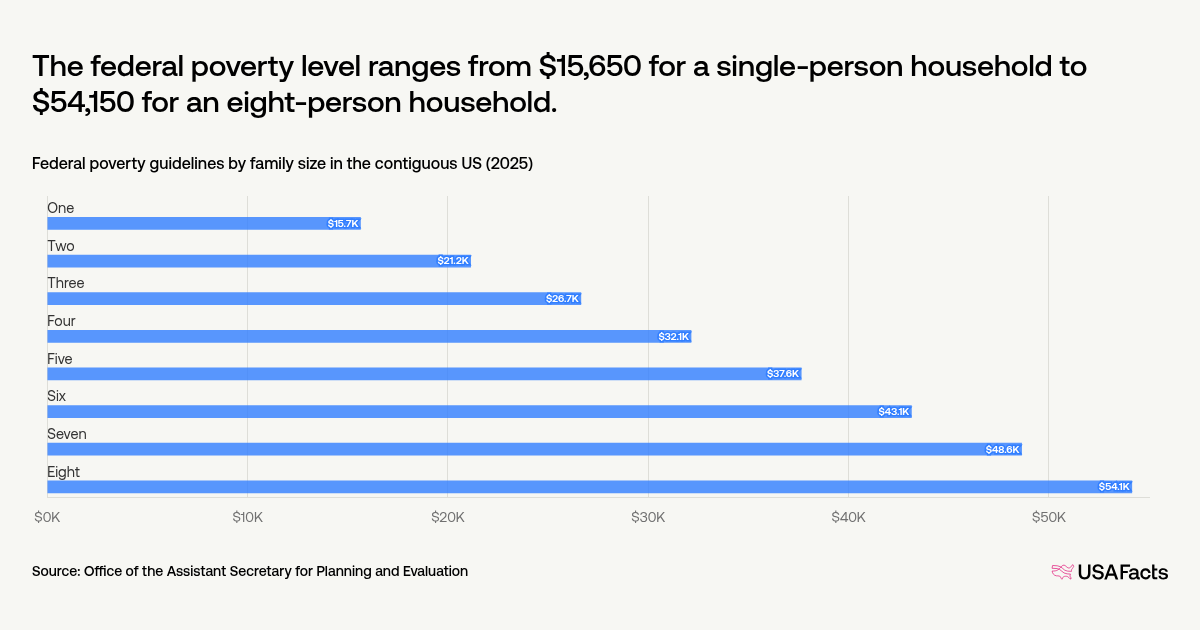
I’ll say it simply to drive the point. The U.S. poverty line is calculated by a subjective measure of food insecurity from 1963 and then updated for the present day with a very questionable rate of inflation determined by our government. This formula is laughably obsolete.
At the time, food made up 1/3 of a family’s expenses; today it is closer to 8%. Conversely, housing today is now 35-45% of income, healthcare is at 15-25%, and childcare is at 20-40%. Expenses and lifestyles have changed dramatically since 1963, but the poverty line does not account for the exponential rise in prices for other necessities. As mentioned before, financial hardship no longer comes from putting food on the table.
Modern poverty comes from modern expenditures. The “participation ticket” to engage in the present society requires numerous costs that used to not exist. We now have data and cell phone plans, longer work commutes, and exponentially higher college tuition and childcare costs. The budget to survive and rear a family now requires an additional burden of debt.
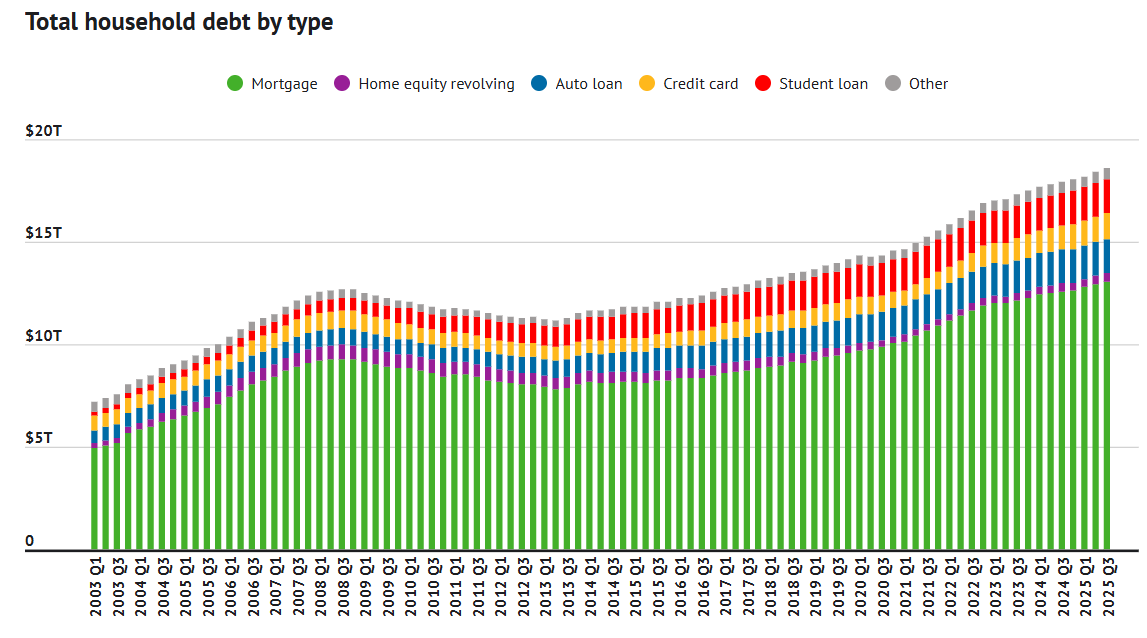
How can poverty be appropriately measured if basic necessities carry an added cost of compounding interest? How can a middle class be determined with mere income levels when households can subject themselves to poverty with debt?
An individual at or below the poverty line can have the same quality of life as a so-called middle-income earner if the government guarantees their baseline needs. The middle class is indistinguishable from the lower class; they just have to pay for the same expenses that others are given.
This begs the question: what is the true poverty line if it has nothing to do with income and little to do with expenses?
The American working class is graced with the absence of archaic poverty, but perhaps we are threatened by a new poverty where we cannot live without two incomes, government stimulus, or crippling debt.
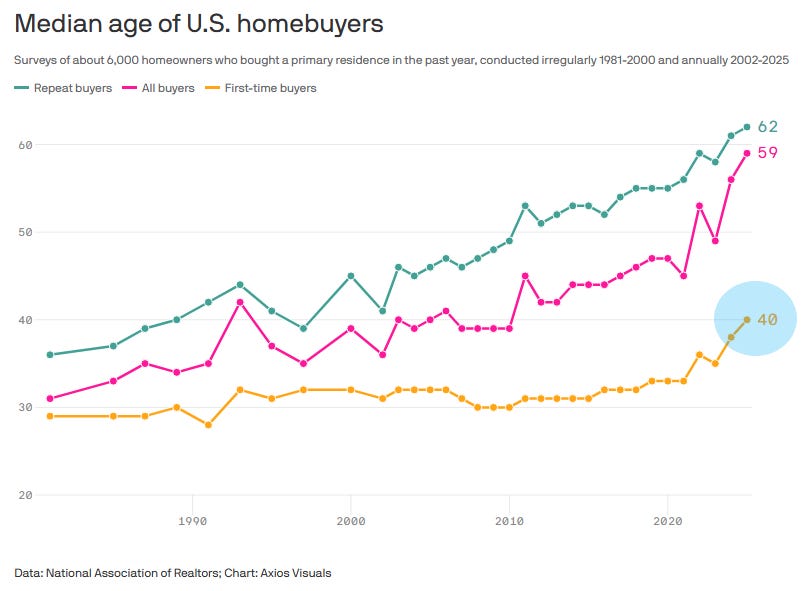
People in poverty used to fear the prospect of having children because they would not be able to feed them. Today gainfully employed adults are terrified to start families because of the insane cost of single-family homes and childcare.
Is this not poverty?
What income allows a household to be free from modern impoverishment? Per usual, the threshold is entirely subjective. Your standard of living is dependent on countless considerations that vary drastically between individuals. A household earning 250K can certainly live paycheck to paycheck with enough frivolous spending habits and be driven into poverty with a single emergency expense. On the contrary, an individual with an inherited home, no student debt, and a public pension could avoid deprivation forever even with a miniscule income.
The poverty line cannot be drawn on myopic thresholds because financial situations are not ubiquitous. Granting government subsidies only to those of a specific income will incentivize people to stay below that threshold, especially if the benefits outweigh the potential income offset by the expense that they used to get for free.
Incomes below 130% of the federal poverty line qualify for SNAP benefits and Medicaid, but once a household exceeds $45k, those benefits vanish. Section 8 housing vouchers are limited to households with 50% of the area median income, but if you get a raise to $65K, you no longer qualify for housing subsidies AND you now must pay the full price for childcare.
You have now entered the income valley of death, where earning more income creates higher monthly expenditures. Now ask yourself, is it fairer to raise the federal poverty line to allow more working class to qualify, or is it better to lower the line and limit benefits to an abject minority?
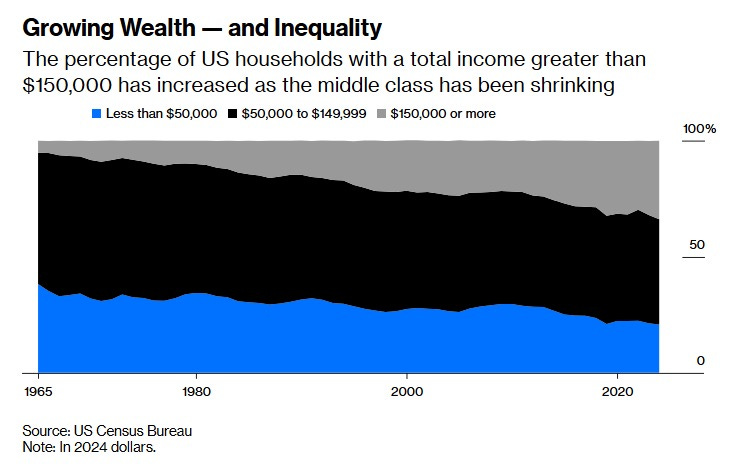
I believe benefits must be either distributed universally or not at all. No thresholds, no incentives, just agreed-upon societal backstops for certain services and free markets for everything else. This mixed economy crap has only inspired more poverty and disintegrated the middle class.
The priorities are all wrong. We cannot work our way out of poverty if we are earning ourselves into higher tax brackets with greater expense burdens.
This of course all ties back to the destruction of our currency. When debt is cheap and money is easily made through means of financialization and asset inflation, wealth is no longer tied to actual productivity. Work ethic is disincentivized as financial success is achieved independent of any value produced. Government handouts become more valuable as the money produced by our labor progressively falls short.
We choose poverty. It is preferred.
If you want to provide for a family, you must opt for impoverishment. You limit your productive capacity to qualify for government services, you abandon your true passions for soulless corporate wages, or you spiral into a hole of debt and spend your life digging your way out.
The federal poverty line isn’t going anywhere, but politicians will certainly dangle the carrot in front of our faces with student debt forgiveness, 50-year subsidized mortgages, and perpetually low interest rates to destroy the currency even further and keep us chasing carrots while we fall further into collective poverty.
This is a slave economy. It is immeasurably far removed from God’s economy.
The Lord wants us to be passionate about our work and create value not only for ourselves but for others as well. We are tasked to practice frugality and be generous with our excess to support those less fortunate. We are supposed to want to give instead of being forced to give, and we accept help when we need it, but never when we want it. We are designed to build families and communities, not to accumulate capricious wealth at the behest of criminal counterfeiters.
We replaced God and virtue with government and greed. It is no wonder that we feel impoverished at any income level. Poverty just means poor. If you are poor in spirit, it doesn’t matter what’s in your bank account.
Well said Eric!